The Competitive Amateur's Guide to Gravel Race Prep
A practical guide to gravel race prep for competitive amateurs — training structure, scouting, nutrition, and bike prep from a masters rider who's done it the hard way.
There's a version of race preparation that looks like a spreadsheet. Periodized blocks, TSS targets, taper protocols, peak fitness windows. That stuff exists for a reason and some of it will show up here.
But most of us aren't professional cyclists. We're 40 or 50-something riders with jobs, families, and a race on the calendar we signed up for in a moment of optimism. The question isn't how to build a perfect training block. It's how to show up on race day genuinely prepared — not just physically, but mentally ready to go when it counts.
This is what works for me.
Pick the Race First. Then Figure Out the Rest.
The single best training decision you can make is having something specific to train toward. Not "get fitter." Not "ride more this spring." A date, a distance, a course.
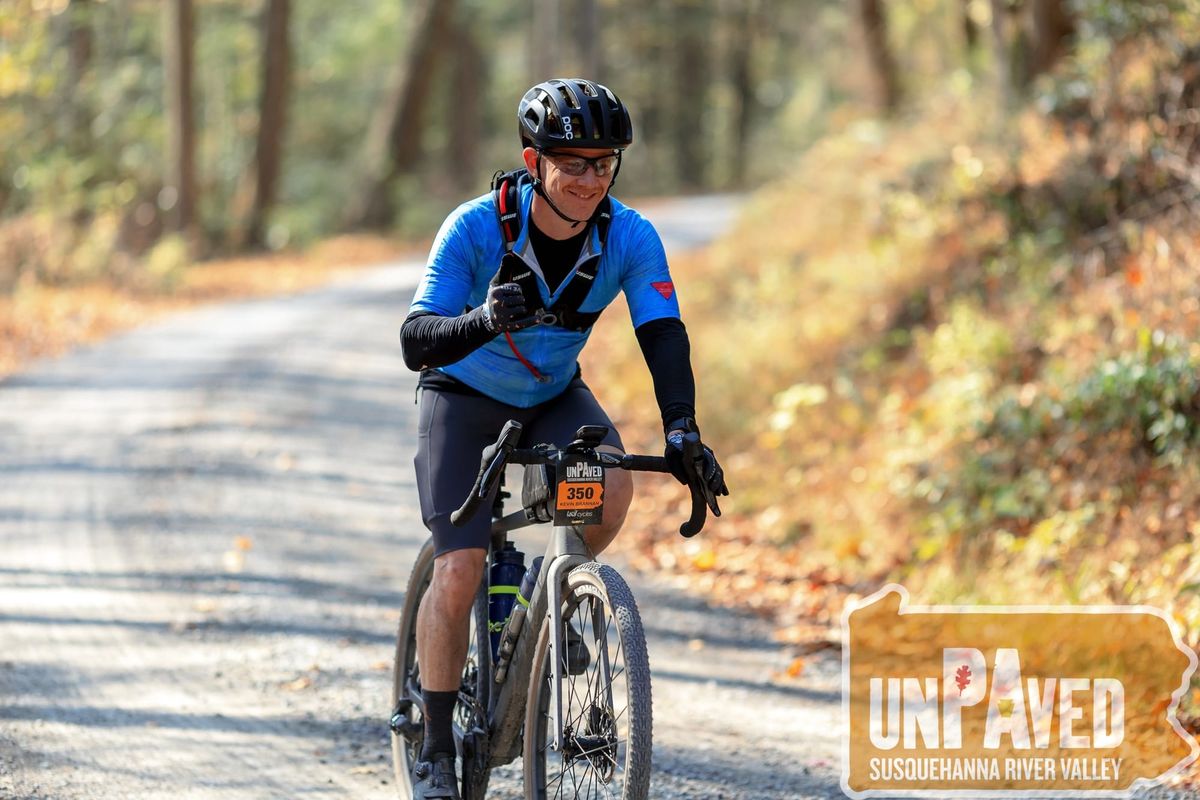
I've ridden UnPAved in Pennsylvania a few times. The first year I was new to gravel — did the 54-miler with two friends, had a great day, felt the distance. The next year I signed up for the 90. I trained toward it, sort of. Travel made the build inconsistent and the night before I was genuinely questioning the decision. Ninety miles was territory I'd never covered on a bike.
My buddy Josh settled it the next morning: "Eh, go for it. You've done the work."
That was enough. I stayed on the 90 route at the split because I was feeling okay and because someone I trusted said I was ready. It sucked. The last stretch was a sufferfest and I didn't want to look at a bike for two days afterward. I also hit my goal, which was simply to finish a distance I'd never attempted.
The point isn't the suffering — it's that having a specific target created the motivation to prepare differently than I would have otherwise. Sign up for something that makes you slightly nervous. Book it as far out as you can. Then build toward it.
Training Structure for Masters Athletes Who Have a Life
I'm 53. I train four days a week when things are going well — two interval sessions and two endurance rides. I try to squeeze in garage gym time too. Here's what that actually looks like and why.
The two interval sessions are where you build engine. Usually threshold, VO2 max, or sweet spot work — hard enough to create adaptation, structured enough to be efficient at an hour each, sometimes 45 minutes. I do these on the trainer because trainer work is pure: no coasting, no traffic, no stopping for lights. The power numbers are honest. I won't pretend it's not boring, because it is. Get some motivating music or videos ready.
The two endurance sessions are lower intensity, longer duration. Aerobic base work. These are the sessions that make the interval work stick and keep you from digging yourself into a hole over a long season.
If you've heard of polarized training, this is in that spirit — make your hard days hard and your easy days genuinely easy. Biologically you're hitting both ends of your energy systems: aerobic work at lower intensities is primarily fat-fueled, while harder anaerobic efforts run on carbohydrates. Spending too much time in the middle — working moderately hard but not really recovering — is where a lot of amateur riders dig a hole they don't know they're in.
On paper, the week looks like this:
- Monday — Intervals
- Wednesday — Endurance
- Friday — Endurance
- Sunday — Long ride or group ride
That's the template. Real life requires flexibility.
How to Work Outdoor Rides Into a Structured Plan
Here's where a lot of riders go wrong: they treat outdoor rides as a bonus on top of their training plan and wonder why they're always tired.
The better approach is to plan around them. Look at the weekend forecast early in the week. If Sunday looks good and you're anticipating a long or hard group ride, structure your week to arrive there fresh.
Move your interval session to Monday — early, before the week gets away from you. Do lighter endurance work Wednesday and Friday. Show up Sunday with legs.
If you only have three days a week total, the math still works: one harder ride early in the week, a second around Thursday, then your longer easier ride on the weekend. Two intense sessions at an hour each build power and fitness. The weekend ride — call it two-plus hours — builds the aerobic base that carries you through long events.
TrainerRoad handles this well. It can ingest your outdoor rides and group rides and adapt your plan around them. If you go deep on a Sunday hammer fest, it knows. The following week adjusts. You're not fighting your plan — you're working with it.
Scout the Race Before You Ride It
You can go in blind. Some people do. But fifteen minutes of research the week before saves you from making avoidable decisions on the course.
Know your support stops. Most gravel events aren't races for most of us — they're tours with timed segments. The front of the field is racing. The rest of us are riding hard, stopping at aid stations, maybe eating a breakfast burrito or the local flavor at mile 40. That's not a knock — that's the format and it's part of what makes gravel events worth doing.
Know how many stops are on your specific route and roughly where they fall. Then carry enough water and nutrition to get you comfortably past each one. A little more than you think you'll need. Aid stations run out of things. You might miss a turn. Conditions change. The extra gel you're carrying at mile 60 because you overpacked at the start is the one that gets you home.
Nutrition: Use What You Know
Same rule as gear — race day is not the day to experiment. Aid stations are stocked with whatever the event sponsor provided. Some of it will agree with you. Some won't. Your gut has no interest in finding out which is which at mile 35 with 55 miles to go.
Carry your own and use what you train with.
On longer, harder days I ride with Neversecond C90 drink mix — but I run it at half dosing, so effectively "C45" per hour. Enough carbs and hydration to keep the engine running without overwhelming my stomach. On the MTB I tend to reach for Tailwind Endurance Fuel instead. Both mix clean and both agree with me, which after enough bad experiences is the only criteria that actually matters.
For bigger efforts I'll carry a few Maurten Gel 100s in my pockets. Chase every gel with water — that's true of any gel, not just Maurten. Your stomach will thank you.
On recovery: this is where a lot of riders leave performance on the table. Post-ride nutrition matters, especially after hard interval days or long efforts. I use Skratch Labs Recovery Sport Drink Mix in chocolate — it actually tastes good, mixes easy in a shaker, and does the job. Get something in within 30-45 minutes of finishing.
I learned this from a decade of CrossFit: a well-rounded meal replaces a recovery drink just fine. Pizza does not. Beer doesn't either — unless it's genuinely well-earned, in which case, cheers.
Know your mechanicals plan.
Some events have a local bike shop on site. Fellow riders will often help. But don't be the person who needs a 5mm allen key to tighten a slipping seat post and has to beg one off a stranger.
Minimum kit every rider should carry:
- Puncture kit and a spare tube
- Tire levers and a pump or CO2
- A basic multi-tool
- A few zip ties — genuinely useful in ways you won't anticipate until you need one
You don't need to carry a workshop. You need to handle the common stuff yourself.
Know the weather. Then check it again.
Mountain and valley terrain changes conditions fast. What starts as a cool morning can turn into something else entirely by the time you're at elevation in the afternoon. Check the forecast for the full duration of your event, not just the start.
Bring more than you need so you can make a final call right before the gun. Arm warmers you can stuff in a pocket. A light vest. Knee warmers if there's any doubt.
And one rule that matters more than any forecast: ride what you train in. Race day is not the day to debut new kit, new shoes, new gloves, or new anything. Use what has worked. The gear that's never failed you in training won't fail you in a race. New gear has opinions you haven't heard yet.
The Taper: Don't Overthink It
Let's be honest about something. Our taper isn't a pro taper. The training volume most competitive amateurs hit at peak is still below what a professional rider does during their recovery weeks. We're not tapering from 20-hour weeks. We're managing fatigue from a training load that, if we're being real, wasn't always consistent anyway.
That doesn't mean the taper doesn't matter. It means keep it simple.
About seven days out, dial the intensity down. Drop the hard interval sessions to endurance pace. You want to arrive at the start line with your legs feeling good and your central nervous system fresh — not still processing a VO2 max workout from four days ago.
I've made the opposite mistake more than once at MTB races — pre-riding the course too hard the day before and paying for it on race day. If you can pre-ride, do it the week before. If the day before is your only option, ride it easy. Spin the course, check the key features, go home. Save the legs.
For gravel I've never pre-ridden — just relied on RideGPS summaries, organizer notes ("75% gravel, 20% road, 5% unknown"), and what I hear from other riders who've done the event. That's usually enough to make smart decisions on tire selection and pacing. Know where the big climbs and race segments are if competing.
Race Day Prep: Start the Night Before
If it's an early start and you're driving a distance, get a local hotel or Airbnb if you can swing it. Showing up race morning after a two-hour drive at 5am is a tax you don't need to pay.
Real race day prep starts the evening before.
Check the weather one more time. Lay out your complete kit — every piece, in order. Set out all your nutrition. Pre-mix your hydration and divide it into two categories: what's on you and the bike at the start, and what goes into support drop bags if the race provides them or you have someone handling support. Don't leave this for the morning of half asleep.
Bike prep — do this a few days out, not the morning of.
Give yourself time to hit the local shop or overnight a part if something needs attention.
- Full bolt check. Torque wrench, every contact point. Takes five minutes and eliminates a category of problems entirely.
- Chain. Inspect, clean, and lube. Do it again morning of the race if you want to be thorough.
- Shifting. Make sure it's flawless. If you're running wireless, charge everything — derailleur, shifters, the works. Then carry a spare rear derailleur battery in your tool kit. Shifter batteries are what actually get people on race day. Check them specifically.
- Tires. Top off the sealant if you can't remember when you last did it. Do this a few days out — gives the tires time to reveal any issues like leaky valves or rim tape problems before you're standing in a staging area ten minutes before the start.
- Brakes. Make sure they work well. If you need new pads, early in the week so you have time to bed them in properly or have the LBS install. Not morning of. Safety first.
- Lights. If your event starts pre-dawn or goes into the dark, your race organizer should let you know and require this well ahead of time. Double check anyway. Get your front, rear, and head lights charged and mounted.
- Map. If it's available — and it usually is — download the course map to your head unit. Turn-by-turn navigation could save you if the course isn't well marked.
The never-leave-home-without-it kit.
I group these together and they live in my helmet, inside my bike box, which goes into the Jeep:
Helmet, eyewear, heart rate monitor chest strap, gloves, AXS batteries, head unit (charged), and a skull cap, hat, or headband depending on the season.
Everything together, every time. The helmet is the anchor — if the helmet is there, the rest follows.
What actually happens during the race — pacing, fueling on the move, managing when things go sideways — that's a different post. Because your mileage will vary.
— Kevin
Got questions or want to compare notes? hello@dialedfordirt.com